

I approached Fly Go 4: Drone Camera Remote as a practical tool rather than a novelty: the kind of app you open when a drone, UAV, or camera needs a remote-control option and the original controller is not immediately at hand. Its purpose is clear, but the real question is whether that purpose fits your particular equipment and flying routine. In my experience, this is an app worth considering when convenience matters more than having the most specialized control setup.
The app comes from Smart Remote Application and sits in the tools category. It is free to install, carries an Everyone content rating, and has reached more than a million installs with an average rating of 4.5 from roughly twenty-two thousand ratings. Those figures suggest that many people find the basic idea useful, although they do not guarantee compatibility with every drone or camera. Remote-control apps are especially dependent on the device being controlled, so I would treat the app as a practical option to test rather than an automatic replacement for dedicated hardware.
Following the complete remote-control workflow
Starting with the right expectation
The first thing I would clarify before opening the app is what problem I am trying to solve. This is not simply a general camera viewer or a universal flying assistant. Its store summary presents it as a remote controller for drones, UAVs, and cameras, while its short description identifies it as Fly Go 4. That makes it most relevant to someone looking for a control-focused companion, not someone searching for a full editing suite, a flight-planning platform, or a social video app.
That distinction matters because the usual alternative is a manufacturer-provided controller or companion app. A dedicated solution normally has a known relationship with one product family, while a broadly positioned remote app asks the user to establish whether the connection works with their own setup. The advantage is flexibility and a lower barrier to trying it. The trade-off is that the experience can be less predictable than using the accessory or software designed specifically for the drone.
I would therefore begin with the drone or camera powered off, the phone charged, and the original controller nearby if available. Keeping the original option close is not just a safety measure; it gives me a fallback if the app does not connect or if a control feels unfamiliar. For a camera mounted in a difficult place, the app may be convenient. For an aircraft already in the air, changing control methods or experimenting with an untested connection is a poor idea.
Preparing the phone and equipment
The current version is 1.7.0 and the minimum operating-system requirement is Android 5.0. That makes the app accessible to people using older Android phones, at least from a software-version perspective. I would still choose the most reliable phone available rather than the oldest compatible one. A remote-control workflow depends on a responsive screen, stable wireless communication, and enough battery to finish the session, so compatibility on paper is only the starting point.
Before a first flight, I would test the complete chain at home. I would launch the app, power the equipment according to its normal connection procedure, and watch for a clear response before attempting any movement. The useful test is not merely whether the app opens. It is whether the intended device is recognized, whether the controls react consistently, and whether the connection remains stable while I move the phone slightly or switch between the app and another screen.
This is one of the less obvious ways to use a tool like this: treat the first session as a setup rehearsal, not as the beginning of a flight. A short bench test can reveal whether the phone is suitable, whether the control layout feels natural, and whether another person needs to handle the camera or drone while I operate the app. That preparation is more valuable than discovering a problem after leaving the ground.
Moving from connection to control
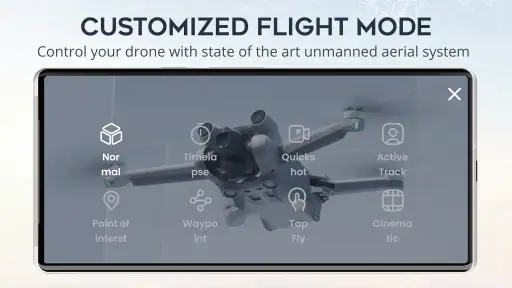
Once the device and phone are ready, I would work through the app in small stages. First comes recognition of the target equipment. Next comes checking the visible control interface. Only after that would I attempt a simple action, such as adjusting the camera position or confirming a basic response from the drone. I prefer this gradual process because a remote interface can appear ready while the physical device is still not in a safe or usable state.
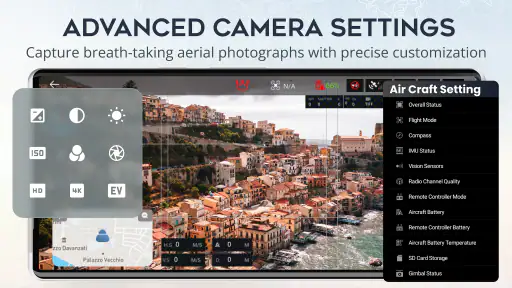
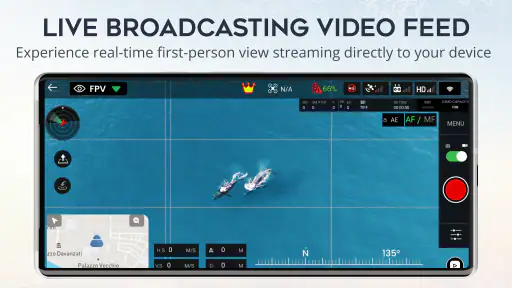
The app’s usefulness depends heavily on how quickly it turns the phone into an understandable control surface. A good remote tool should let me focus on the equipment instead of constantly searching for the next command. With a touchscreen, however, there is an unavoidable compromise: physical buttons provide tactile feedback, while a phone screen requires visual confirmation. That makes the app attractive for occasional use and less compelling for someone who flies frequently and already owns a comfortable dedicated controller.
For a camera workflow, the handoff is simpler. I can place the camera where it needs to be, use the phone as the control point, and keep the physical setup undisturbed. This could be useful when the camera is mounted above eye level, positioned across a room, or attached to equipment that would be awkward to reach repeatedly. The benefit is not just remote access; it is avoiding unnecessary movement around the shot.
Handling the handoffs between people and devices
A realistic use case is a small outdoor recording session. I might position a camera or compatible drone, ask a friend to watch the physical setup, and keep the phone with me so I can make the control input. The handoff is then clear: one person checks the equipment, another operates the interface, and both confirm the result. That arrangement can be smoother than passing a dedicated controller around, especially when the person responsible for framing is not the same person responsible for placement.
There is also a useful indoor scenario. Imagine setting up a camera for a family event or a demonstration where touching the camera would disturb its position. I could leave the device in place, use the phone to make the needed adjustment, and review the outcome from a more convenient position. In that situation, the app’s value comes from reducing physical interruptions rather than adding advanced production tools.
Still, a phone-based handoff introduces its own friction. The person receiving the phone must understand which screen is active and which input is safe to make. A locked screen, an incoming notification, or an accidental gesture can interrupt attention. I would avoid passing the device during a critical movement and would agree in advance on who has control. This sounds basic, but it is exactly the kind of everyday detail that separates a useful remote workflow from a frustrating one.
Checking the result instead of assuming success
After an input, I would verify the physical outcome. If I adjusted a camera, I would check framing rather than assuming the command was applied. If I sent a drone-related command, I would confirm its response visually and keep the surrounding area in mind. A remote app should be treated as an input method, not as proof that the equipment completed the intended action.
This verification step is particularly important when the phone is being used at a distance. The screen may show a control state, but the final result is still determined by the connected device, its position, and the surrounding conditions. My preferred workflow is input, pause, visual confirmation, and only then the next input. It is slower than tapping rapidly through commands, but it gives me a much clearer understanding of what actually happened.
For camera users, the result may be a cleaner shot because the device was not touched. For drone users, the result is more demanding: control has to remain predictable, and the operator has to stay aware of the aircraft rather than staring continuously at the phone. I would use this app only where I can maintain that awareness and where local flying rules and personal safety practices are already being followed.
What makes it useful compared with familiar alternatives
The strongest argument for this app is convenience. A phone is easier to carry than an additional controller, and a free app is easier to try than buying hardware before knowing whether it solves the problem. That makes it appealing for occasional users, people setting up a camera in a hard-to-reach position, and anyone who wants a low-commitment remote option.
The ordinary alternative, however, remains important. A dedicated controller usually feels better for repeated operation because its controls are designed around the task rather than around a general touchscreen. The manufacturer’s own app may also provide a more tightly integrated experience for a particular model. If I fly often, depend on precise inputs, or need a workflow built around one specific aircraft, I would compare those options carefully before making this my primary controller.
Another alternative is simply walking over to the camera or using its physical controls. That may sound less sophisticated, but it can be more dependable when the setup is close by. Fly Go 4 earns its place when distance, positioning, or convenience creates a real reason to control the device from the phone. If there is no such reason, adding a remote app may create another step without improving the result.
Where the workflow becomes difficult
The main point of friction is compatibility. A description that covers drones, UAVs, and cameras sounds broad, but broad coverage should not be confused with guaranteed support for every model. I would not buy equipment or plan an important shoot around the assumption that the app will work. I would test it with the exact device first and keep an alternative control method available for anything important.
The second issue is the touchscreen itself. A phone gives me a familiar display, but it does not provide the same physical certainty as a controller with dedicated sticks or buttons. Gloves, bright outdoor conditions, accidental touches, and the need to look down at the screen can all make operation less comfortable. For a stationary camera, those drawbacks may be minor. For a moving aircraft, they deserve much more weight in the decision.
There is also a difference between occasional convenience and dependable professional workflow. I would be comfortable exploring the app for personal projects, simple remote camera placement, or a spare-control scenario after testing it. I would be more cautious about relying on it as the only method during a paid shoot, a time-sensitive event, or a flight where losing control would create a serious problem. In those situations, the specialized alternative is usually worth the extra preparation.
The free price lowers the risk of trying it, but the app includes in-app purchases ranging from $4.49 to $59.99 per item. That means I would pay attention to what is available before assuming every part of the experience is included at no cost. I would begin with the free installation, test the basic workflow, and only consider an in-app purchase if it clearly addresses a need I have already identified. Paying first and testing later is the wrong order for a compatibility-dependent tool.
Who should use it and who should skip it
I think this app is best suited to an Android user who wants to experiment with phone-based control, needs a convenient way to reach a camera without touching it, or wants a spare option for compatible drone and UAV equipment. It is also a reasonable choice for someone who values portability and does not want to carry a separate controller for every occasional session.
I would skip it as a primary solution if I fly regularly, require highly tactile controls, or already have a reliable manufacturer controller that fits my equipment. I would also avoid making it the center of a critical workflow until I had tested the exact phone, connection, and device together. The app can be useful without being the best answer for every owner.
Smart Remote Application has made the entry point simple: the tool is free to install, aimed at Everyone, and available on Android devices starting with version 5.0. Its popularity, reflected in more than a million installs and a 4.5 average, gives it enough credibility to justify a trial. But those figures should encourage testing, not replace it. Remote control is too dependent on the equipment at the other end to judge solely by popularity.
My recommendation after following the full process
After looking at the workflow from preparation through handoff and result checking, I see Fly Go 4 as a convenience-first remote tool. Its best moment is when the phone removes an awkward step: reaching a mounted camera, sharing control during a casual recording session, or trying a remote option without purchasing another controller immediately.
Its weakest moment is when precision, tactile feedback, or guaranteed compatibility matters more than portability. The app cannot remove the practical responsibilities of checking the device, watching the equipment, and keeping a fallback plan. Those limits do not make it useless; they define the situations where it makes sense.
My advice is to install it, test it on the exact equipment in a safe setting, and judge the connection before trusting it with a real flight or important recording. If the controls feel responsive and the handoffs in your setup are simple, it may become a handy part of your toolkit. If the test exposes uncertainty, the original controller or a device-specific alternative is the wiser choice. For me, that balanced position is the app’s real appeal: an accessible experiment with practical value, provided I treat it as a tested tool rather than a universal replacement.


